How to run 40 000* tests in 10 min
*40702 and counting
The talk has two parts: infrastructure and ruby
But I hope you will find this presentation useful if you have less tests
How do we have 40 000+ tests?
We run a matured Rails monolith
A well tested one with over 90% coverage
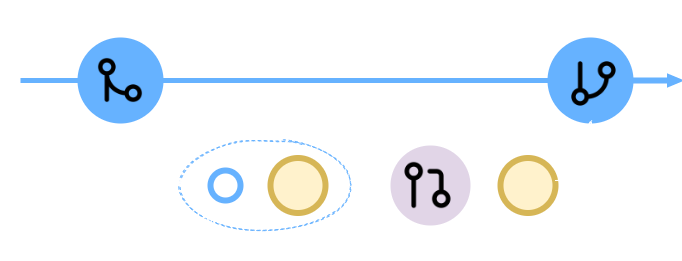
We use a standard git flow
 Imagine you implemented an awesome feature
You make a PR, and wait for tests to finish
CI fails, you make a fix, wait again
Another spec fails. Frustrated?
CI should be fast to reduce developers frustration
The answer is of course parallelization
Without it test suite executes in 21 hours, 17 minutes*
Imagine you implemented an awesome feature
You make a PR, and wait for tests to finish
CI fails, you make a fix, wait again
Another spec fails. Frustrated?
CI should be fast to reduce developers frustration
The answer is of course parallelization
Without it test suite executes in 21 hours, 17 minutes*
*p95, 4 vCPU, 8 GiB RAM
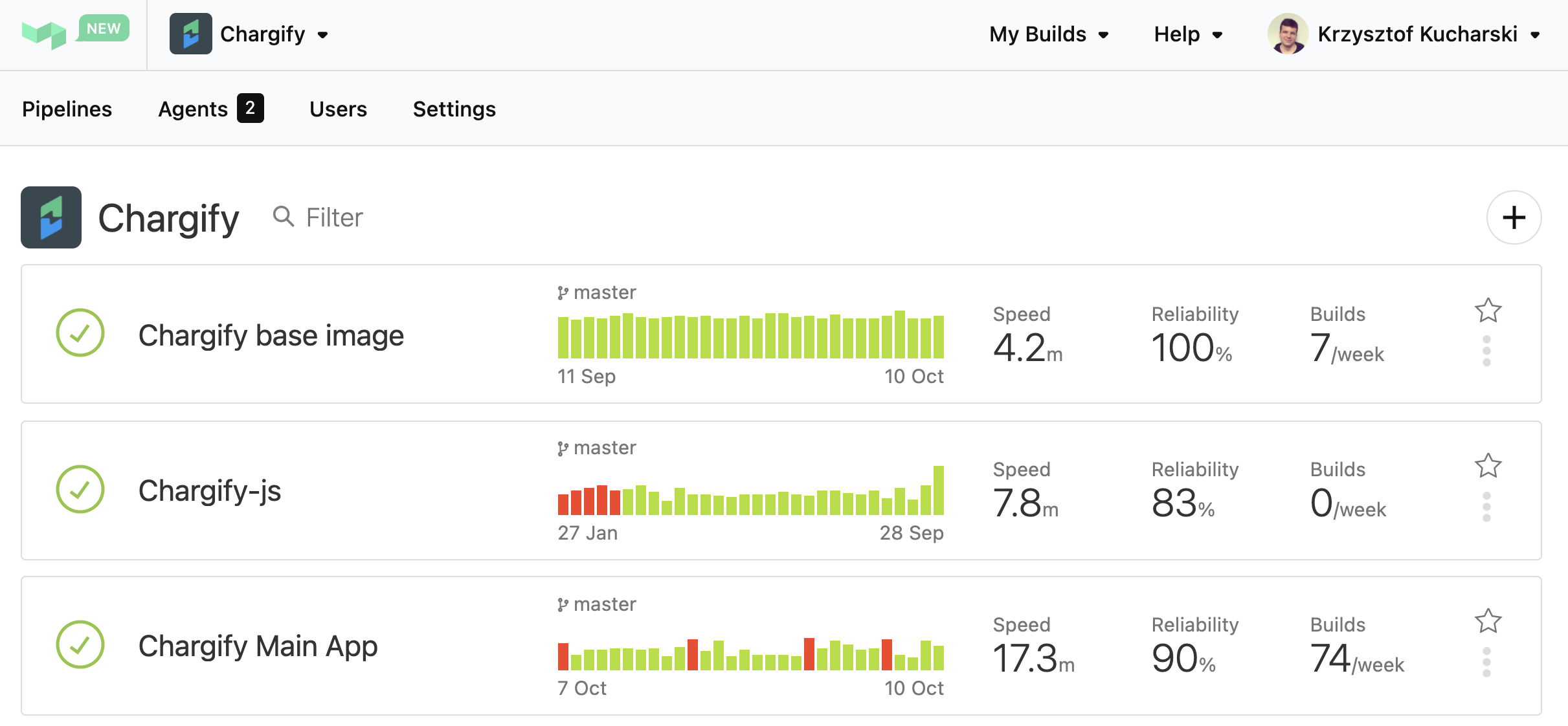
We use  Buildkite as our CI platform
It gives us flexible pipelines which are just templates, composed of steps.
Steps mostly run shell commands and can be conditional
```yaml
steps:
- name: ":eslint:"
command: "yarn install && yarn eslint"
- name: ":rspec:"
command: "bundle install && bundle exec rspec --color specs"\
parallelism: 10
```
Every new commit creates a build, which is being run by agents
Most important feature of Buildkite: it runs on our own AWS infrastructure
We use autoscalling to dynamically setup number of nodes (ec2 instances), on which one or more agents reside.
In Chargify pipelines we rely on Docker extensively
How to run rspec in parallel effectively?
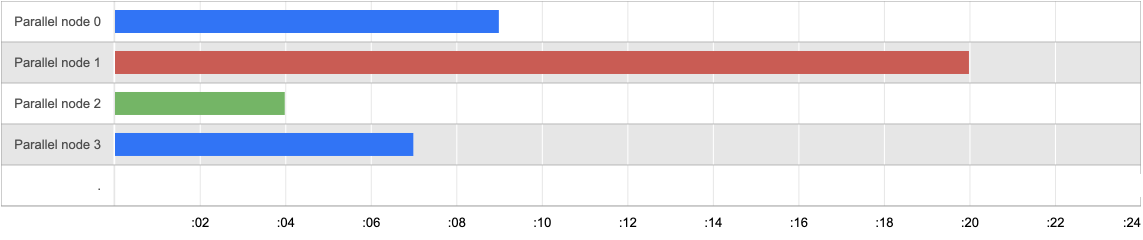
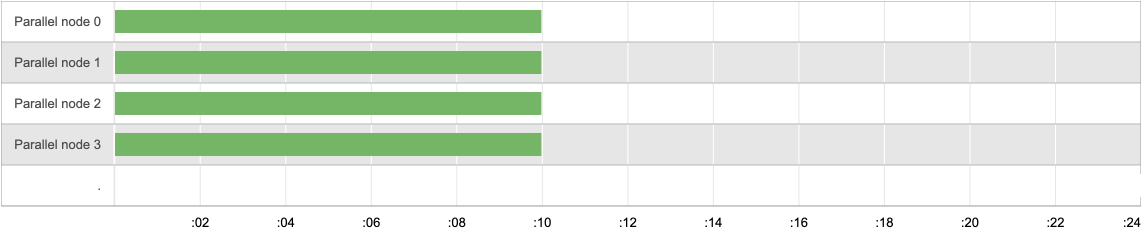
Enter Knapsack gem. Knapsack splits all tests evenly across parallel all agents (152).
Even split is not enough. Some tests are fast, some take forever sometimes
Infrastructure tips & tricks
Buildkite as our CI platform
It gives us flexible pipelines which are just templates, composed of steps.
Steps mostly run shell commands and can be conditional
```yaml
steps:
- name: ":eslint:"
command: "yarn install && yarn eslint"
- name: ":rspec:"
command: "bundle install && bundle exec rspec --color specs"\
parallelism: 10
```
Every new commit creates a build, which is being run by agents
Most important feature of Buildkite: it runs on our own AWS infrastructure
We use autoscalling to dynamically setup number of nodes (ec2 instances), on which one or more agents reside.
In Chargify pipelines we rely on Docker extensively
How to run rspec in parallel effectively?
Enter Knapsack gem. Knapsack splits all tests evenly across parallel all agents (152).
Even split is not enough. Some tests are fast, some take forever sometimes
Infrastructure tips & tricks
Experiment with hardware - switching instance type gave us 5% boost for same price
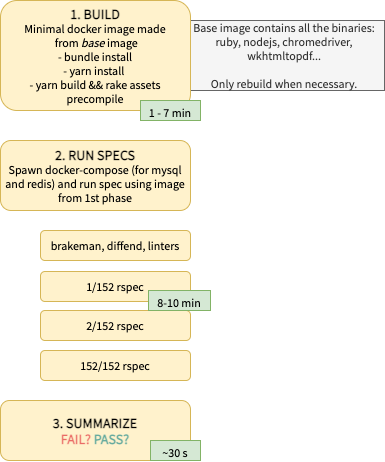
Prepare your base image, you don't need to install node, ruby every single build
Keep your docker-compose loaded dbs in ramdisk
```# docker-compose.yml
services:
mysql:
image: mysql:8.0
command: --default-authentication-plugin=mysql_native_password
restart: always
environment:
- MYSQL_ALLOW_EMPTY_PASSWORD=true
volumes:
- type: tmpfs
target: /var/lib/mysql
```
Minimize layers in docker image
Instead of:
```
# Dockerfile
RUN cd frontend
RUN yarn install --frozen-lockfile --production
RUN yarn build
RUN yarn cache clean
```
Do:
```
RUN cd frontend && \
yarn install --frozen-lockfile --production && \
yarn build && \
yarn cache clean
```
Use bundle-cache ( https://github.com/sosedoff/bundle_cache ) to store gems zipped in s3.
`bundle install` is the most time-consuming phase of our build phase.
That's all good, but we can do more with specs itself
Focus on slowest specs
`rspec --profile path/to/specs.rb` might be sufficient
The next step is to check what spec is doing by profiling it, i. e. using `StackProf`
It will give you a call-stack, which you can then visualize using flamegraphs.
Or just go with EvilMartians test profiling toolbox ( https://github.com/test-prof/test-prof )
Profiling our spec brought interesting result (and a story I can tell)
Ruby is fast
 Slowest of our specs had a thing in common
They created our whole Chargify pricing in MySQL, which after 10 years on the market grew a bit
Almost 600 records saved to the db
`tapes_helper.rb` was born. It:
- records all SQL interactions
- dumps them to *.sql file
- restores db from dump file instead if file exists
Caveat: must be executed before everything else.
Before:
```ruby
before(:each) do
ChargifyAccount::Plan.bootstrap!
end
```
After
```ruby
before(:each) do
Tapes.use_tape("chargify_account_plan_bootstrap") do
ChargifyAccount::Plan.bootstrap!
end
end
```
Use VCR gem (or similar tool) to record HTTP requests and cut off internet access within your specs.
But update the recordings from time to time
From time to time we test interactions with an live external API. Our tests suite has a conditional flag for it.
It can be run demand and is run on schedule every 4 hours.
Disable logging (free 5%)
```ruby
config.logger = Logger.new(nil)
config.log_level = :fatal
```
Combine slow integration specs
Before
```ruby
it "assigns site from subdomain to @site" do
get :index
expect(assigns(:site)).to eq(site)
end
it "assigns seller from the site in the subdomain to @seller" do
get :index
expect(assigns(:seller)).to eq(site.seller)
end
```
After
```ruby
it "assigns site from subdomain to seller and vice versa" do
get :index
expect(assigns(:site)).to eq(site)
expect(assigns(:seller)).to eq(site.seller)
end
```
replace `create(:model)` with `build_stubbed(:model)` or `build(:model)`
(for FactoryBot users)
Keep your factories cascadeless
```ruby
factory :subscription do
site
seller
end
factory :site do
seller
end
factory :seller do
end
create(:subscription) # How many records?
```
```
# 4 records:
# subscription
# site
# seller
# seller
```
It's a thin line to overdo tests speedup. Keep your tests fast but there are limits (and budgets)
Slowest of our specs had a thing in common
They created our whole Chargify pricing in MySQL, which after 10 years on the market grew a bit
Almost 600 records saved to the db
`tapes_helper.rb` was born. It:
- records all SQL interactions
- dumps them to *.sql file
- restores db from dump file instead if file exists
Caveat: must be executed before everything else.
Before:
```ruby
before(:each) do
ChargifyAccount::Plan.bootstrap!
end
```
After
```ruby
before(:each) do
Tapes.use_tape("chargify_account_plan_bootstrap") do
ChargifyAccount::Plan.bootstrap!
end
end
```
Use VCR gem (or similar tool) to record HTTP requests and cut off internet access within your specs.
But update the recordings from time to time
From time to time we test interactions with an live external API. Our tests suite has a conditional flag for it.
It can be run demand and is run on schedule every 4 hours.
Disable logging (free 5%)
```ruby
config.logger = Logger.new(nil)
config.log_level = :fatal
```
Combine slow integration specs
Before
```ruby
it "assigns site from subdomain to @site" do
get :index
expect(assigns(:site)).to eq(site)
end
it "assigns seller from the site in the subdomain to @seller" do
get :index
expect(assigns(:seller)).to eq(site.seller)
end
```
After
```ruby
it "assigns site from subdomain to seller and vice versa" do
get :index
expect(assigns(:site)).to eq(site)
expect(assigns(:seller)).to eq(site.seller)
end
```
replace `create(:model)` with `build_stubbed(:model)` or `build(:model)`
(for FactoryBot users)
Keep your factories cascadeless
```ruby
factory :subscription do
site
seller
end
factory :site do
seller
end
factory :seller do
end
create(:subscription) # How many records?
```
```
# 4 records:
# subscription
# site
# seller
# seller
```
It's a thin line to overdo tests speedup. Keep your tests fast but there are limits (and budgets)